The National – High Violet

May 14, 2010

In my write up for my pick of 2007’s album of the year, I remarked that “no album grabs you by the heart and hits you in the gut like The National’s Boxer.”  Three years later, I may have to re-phrase that to say no band grabs you by the heart and hits you in the gut as The National, because with High Violet, The National have once again created an album full of haunting anthems that burrow beneath your skin and become implanted in your every thought.  No band does somber, yet somehow not depressing, like Brooklyn’s The National.  There is a subtle bit of hope in all of their tunes that gives it a sense of majesty that really can’t be matched by any band.  It’s an accomplishment that is truly remarkable and probably doesn’t get the credit deserves, but with High Violet, the band’s achievements are becoming harder and harder to ignore.

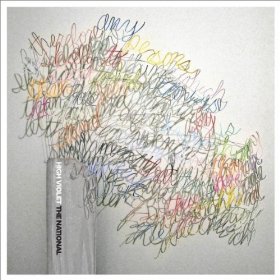
Much like Boxer, The National use High Violet to tackle such themes of urban alienation and other concerns of the middle class as those day to day tasks become mundane and fears of a life wasted start to creep into one’s mind.  However, whereas Boxer‘s subject matter tended towards uncertainty during a transition period, High Violet is more concerned about the after effects of the transition and trying to find the vibrant colors in what may seem like a dull colorless existence (I mean, just look at the cover art.)

Musically, High Violet isn’t breaking any new ground for the group, but it does refine and improve on all the band’s strengths.  Matt Berninger still doesn’t encompass enough of a range to be considered a great singer, but his baritone vocals remain a perfect fit for the moody music that backs him up.  Only Berninger could pack a sadness into a string of “doo doo doo”s like he does on “Lemonworld”, and the vulnerability in his voice makes it seem like there’s as much being said in those short fillers than most bands try to say on a complete album.  But with any National album, it’s those two set of brothers behind Berninger that take the band to it’s level of immense grandeur.  As usual, this starts with the rhythm section and drummer Bryan Devendorf.  While poor or uninspired drumming doesn’t necessarily kill a song, used effectively it can absolutely take it to new levels and The National have perfected that with Devendorf’s driving percussion.  Other than Bernigner’s voice, there is probably not a more distinctive part of The National’s sound than it’s drumming, and it’s done in such a subtle way that it doesn’t overbear the rest of the music one bit.  It’s truly mesmerizing how well these five guys work as a quintet.

The album’s most triumphant moments comes from the Sufjan Stevens assisted “Afraid of Anyone” and first single “Bloodbuzz Ohio”, which both rival anything the group has ever done.  They’re the most immediate and memorable songs on an album full of intricate compositions that take a little more effort from the listener to appreciate, but don’t sacrifice any of their depth.  It’s not all perfect, however, and unfortunately the flaws show up on the bookends of the disc.  Opening track “Terrible Love” is a wonderful song and after being debuted on Jimmy Fallon, was thought of to be one of the album highlights, but for some reason the band ravished the song with questionable production.  For a band known for its precise songwriting and meticulousness during the production process, there’s no doubt this was done on purpose.  But intentional or not, why they decided to take such a promising song and muck it up with muddy production is beyond me.  Likewise, while “Vanderlyle Crybaby Geeks” is a fine song, it feels unnecessarily tacked on to the end.  The album would have been fine being capped off at 10 tracks and having “England” close it out.  But when my biggest quibbles are production techniques and song placement, it’s clear that I’m grasping for straws when trying to find the album’s imperfections.

High Violet is another masterful release from this group of unassuming sorrowful rockers, their third such masterpiece in a row.  While Boxer one upped its predecessor Alligator, it’s hard to say if High Violet has done the same to Boxer.  But when your predecessor was one of the best albums of the last decade, merely matching up to it is an accomplishment of its own and I have no qualms saying High Violet has done at least that.

[“Bloodbuzz Ohio” – High Violet]


The Hold Steady – Heaven is Whenever

May 8, 2010

Prior to the release of The Hold Steady’s fifth album I was preparing myself for a let down.  2008’s Stay Positive was the group’s first glimmer of a transition to more modern rock sound and away from their “bar band” roots, and with the group that much older in 2010, it could only be expected to see that movement continue.  The band hinted at a “less anthemic and more complex” album which raised a huge red flag for all THS fans and then of course, energetic keyboardist Franz Nicolay left the band taking his accordion and mustache with him.  So with all that said, everything seemed to be lining up for a bit of a bust, but after listening to Heaven is Whenever, I can honestly say I was not let down nearly as much as I expected.

There are still plenty of jams on Heaven is Whenever full of sing along choruses that fans have come to expect making the whole “less anthemic and more complex” warning maybe a bit of a ruse.  Tad Kubler still gets a couple guitar solos in, most notably on “Weekenders” and “Rock Problems”.  And who needs an accordion when you have a freakin’ clarinet?? (See  solo on “Barely Breathing”.)  Lyrically, the themes of partying and adolescent uncertainty are still captured and Craig Finn still does a masterful job of referencing his own work, this time even harkening back to their debut Almost Killed Me possibly as a way for the band to say they’ve grown up and it’s time to look back and see if they’ve carried through with what they set out to do…i.e. held steady.

Where the album falters is that it just seems to be a more restrained version of The Hold Steady.  There are less of those jams I spoke of as compared to their previous work, and it’s the first album where I really noticed Finn singing rather than doing his usual speak-singing throughout the songs.  For whatever reason, this seems to sacrifice some of the relatable qualities that has always characterized the band.  The raw energy of the group doesn’t show up as much which in part can be attributed to those dreaded over-production techniques that has claimed oh so many albums.  And make no mistake about it; this band misses Franz Nicolay. But if I can be blatantly cliché for a moment, while Heaven is Whenever is probably the band’s worst album, that’s more of a testament to the greatness of their previous four.

The mystery of exactly when “heaven is whenever” is doesn’t come until pseudo title-track, “We Can Get Together”.  Turns out “heaven is whenever we can get together, sit down on your floor, and listen to your records.”  For a band that is always preaching about the redemptive power of rock ‘n’ roll, this should come as no surprise.  They may be transitioning to an older rock band, but Craig Finn and the boys still know who they are, where they come from, and what they stand for, and as long as that spirit continues to pervade throughout the band, there should be no fear of a Hold Steady let down.

[“Hurricane J” – Heaven is Whenever]


Shearwater – The Golden Archipelago

February 23, 2010

Followers of Jonathan Meiburg’s career to this point can certainly attest to his knack for theatrics, from his work in the Austin, Texas folk-rock group Okkervil River to his latest release, The Golden Archipelago, which is the most recent in a series of concept albums by his Shearwater project.  Although, with Meiburg’s official departure from Okkervil River as of a couple years ago to focus 100% on Shearwater, project is no longer an appropriate descriptor for the band.  Initially founded in 2001 along with his Okkervil River co-founder, Will Sheff, as an avenue for the pair to create quieter songs with increased instrumentation, Shearwater became more and more Meiburg’s baby as years went on.  It all came together in 2008 with the band’s breakout album, Rook, an epic masterpiece that placed the group on the same pedestal as their sister band and emphasized Meiburg’s flare for grandiosity in his tunes maybe even Okkervil River couldn’t match.

The Golden Archipelago continues on the theme of man’s impact and ongoing relationship with this earth that was prevalent in the groups previous two albums, this time focusing on island life, something Meiburg can draw influence from considering his experience taking part in a travel fellowship shortly after his undergraduate days that sent him to numerous islands across the globe to study remote cultures and communities.  Meiburg has a graduate degree in geology specializing in ornithology (hence the band name), so there’s no surprise his music features such an ethereal feel and contains so much imagery of the natural world.  His education certainly plays a part in the intelligence of the music and Meiburg does admit he worries “that people think they’re getting a dissertation instead of just a record.”  To which I respond: Why can’t it be both?  However, that’s not to say the music can’t stand on it’s own, because it most certainly does, but it’s nice to have some muscle backing it up when the listener wants to delve a little deeper.

Musically, The Golden Archipelago still contains the bombast and triumph that Rook perfected so well, but doesn’t quite match the abundance of climactic moments found throughout Rook.  The grandiose is sustained more throughout the songs of TGA rather than the building crescendos leading into crashes of grandeur that characterized it’s predecessor.  It only hurts the music in that the songs aren’t quite as memorable as songs past, and don’t contain the amount of immediate hooks to grasp the listener.  There are moments of that in The Golden Archipelago, such as songs “Black Eyes” and the excellent “Castaways” (which I wish was longer…only complaint), but for the most part, the songs create a more atmospheric feel, which is just as good, but maybe not as instantly accessible to the casual listener.  So in the end, The Golden Archipelago doesn’t have as many standout tracks as Rook, but might actually work better as a complete album.  The musicianship, especially from percussionist Thor Harris (and yes, he looks just like you would picture a Thor to look like), and Meiburg’s soaring vocals create another gorgeous and epic listen that rewards anyone willing to travel along with Meiburg on his ambitious journey.

[“Castaways” – The Golden Archipelago]


Yeasayer – Odd Blood

February 21, 2010

Deciding which albums I choose to review here on A Round of Sound is not necessarily an arbitrary process.  Rarely will I give a review to an album I don’t like, but I do save some negative reviews for those albums that I found more disappointing than horrible.  I’m usually not going to review a so-so album that really offers nothing spectacular to talk about.  There can be an amazing album that I won’t review because really whatever needs to be said about it has most likely already been said, and I can’t come up with anything new to say.  Basically, it’s all about talking points.  If an album speaks to me in a way that offers up some talking points, I’ll try to give it a review.  Trust me, with Yeasayer’s Odd Blood, there’s pleny to talk about.

Yeasayer first hit the scene with 2007’s excellent All Hour Cymbals, an album full of worldly influences ranging from African drum beats to a little bit middle eastern flare.  The first taste of what to expect on Yeasayer’s sophomore release came back last Fall when the band released lead single “Ambling Alp” which was an indication that Yeasayer was ready to release a pop album.  The Brooklyn based group’s first album drew poor man’s Animal Collective comparisons, and while it took AC 9 albums to venture into pop, Yeasayer decided to go ahead and take the plunge on Odd Blood.  The results, while mixed, are positive overall.

Sonically, Odd Blood is much bigger than All Hour Cymbals with a more polished production and “everything but the kitchen sink” songwriting techniques.  Opener “The Children” features distorted vocals with a driving back beat full of electronic manipulations to create enough intrigue that keeps the vocals from being distracting before giving way to the aforementioned “Ambling Alp” which is the album’s best song, perfectly combining the group’s world music style with their pop ambitions.  The couple songs that follow continue down this path but employ an unexpected twist with a bit of 80s style.  It works to near perfection, especially on the excellent “Madder Red” which probably hasn’t gotten released as a single to this point because of it’s songwriting similarity to “Ambling Alp” which opened the door for “O.N.E.” to be the latest single released from the disc.  By the time “O.N.E” closes out the front side of the record, Odd Blood has evolved almost into a dance album, and the second half of the disc only exemplifies this notion, especially on “Rome” whose intro immediately conjures up images of Christopher Walken dancing in that Fatboy Slim video.

It’s no stretch to say that Odd Blood is quite front-loaded, with the most memorable moments all coming in the first five songs.  It certainly has its missteps on side two especially with the five minute “Love Me Girl” which struggles to find an identity and comes across as a bit of a  jumbled mess and plainly just doesn’t do it for me.  With more upbeat songs comes more uplifting lyrics so I suppose I’ll forgive some of the cheese found throughout the songs but hearing stuff like “Don’t give up on me, and I won’t give up on you” or “You’re stuck in my mind all the time” isn’t very creative and really isn’t saying much of anything.  Likewise, while catchy and easy to remember telling us to “Stick up for yourself, son” doesn’t really come across as inspiring as Yeasayer may have hoped.  So, it’s not all perfect, but then again the 2nd half of All Hour Cymbals wasn’t nearly as strong as the first, but overall it still ended up as a fine album.  All in all, Odd Blood can’t quite match the excellence of their debut as this one just doesn’t quite have that epic feel to it that All Hour Cymbals had, but there’s no doubt Yeasayer had a vision when they set out to create Odd Blood, and I think as a whole they accomplished those goals and pushed aside any notion of a possible sophomore slump, son.

[“Ambling Alp” – Odd Blood]


David Bazan – Curse Your Branches

September 7, 2009

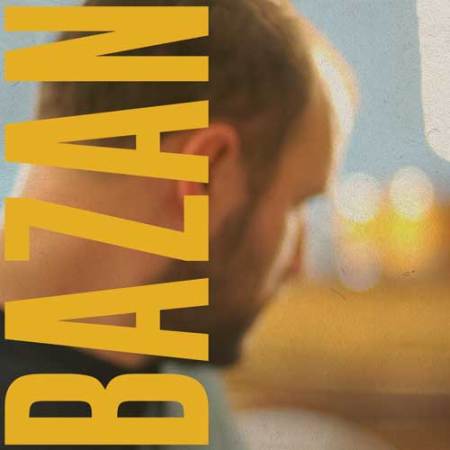
In 1998, David Bazan released It’s Hard to Find a Friend, the 1st of four LP’s under the Pedro the Lion moniker.  The album introduced Bazan’s songwriting which carried a strong Christian influence but also had a unique viewpoint on Christianity not seen from most “Christian” artists.  One such song, “Secret of the Easy Yoke”, an almost 7 minute long critique on Christianity, is to this day is still an anthem for the “disenfranchised and alienated Christian”, as Dave puts it.   Bazan is quick to point out that 11 or 12 years later, those same critiques remain, only this time, his perspective is from the other side of the fence as Dave’s highly publicized “breakup with God” is the inspiration behind the aptly titled Curse Your Branches, the first full-length album under David Bazan’s name.

bark83_500

The name Pedro the Lion was retired after the group’s final tour and album, Achilles Heel, in 2004, ending years of Bazan being the posterboy for crossover Christian/secular artists.  For whatever reason, Pedro the Lion always took the lion’s share (no pun intended) of controversy from the evangelical public who just couldn’t quite wrap their head’s around such a genre.  While never actually claiming to be a Christian band, Bazan did indeed wear his faith on his sleeve, while at the same time covering subjects ranging from his aforementioned critiques on the Church, to his stories of corrupt politicians, murderers, and other Bazan parables (See all of Winners Never Quit or Control, and tracks such as “Transcontinental” or “Discretion”) that held a different perspective on humanity than many wouldn’t expect from a Christian artist.  At just about every one of Bazan’s Pedro shows, during one of his patented exchanges with the audience in between songs there would be that one guy who would without fail ask “So…are you really a Christian?”.  With the subject matter that Bazan covered up to this point in his career, it was clear that he had questions and concerns and why it should really come as no surprise that his doubts finally led to a falling away from God.

With Curse Your Branches, Bazan has written his most personal album yet, one that delves deeply into the issues that led to Dave to question his faith and eventually leave the Church.  He still speaks of God and The Bible, oftentimes speaking in a first person perspective, so it’s clear that he hasn’t necessarily cut all ties with the God he followed his entire life, but he now leans more toward agnosticism, but by no means is an atheist.  Bazan’s lyrics have always been the focal point of his music, however, they have rarely, if ever, captured such deep insight into the demons that have plagued him throughout the years.  Musically, Curse Your Branches does not offer anything new to the Bazan catalog.  The songs still contain their acoustic and at times folky stylings, with a bit of his synth influences from his lone Headphones album thrown in, most evident in opening tracks “Hard to Be” and “Bless This Mess”.  The songs are probably not as catchy or instantly memorable as in the past, but this is an album where it seems Bazan made sure the music takes a back seat to what he has to say.  Many longtime (and Christian) fans of David Bazan will certainly feel betrayed by Dave’s change of heart, and will probably stay away from Curse Your Branches for fear of hearing the arguments Bazan is making.  But those that give it a try will hear a very interesting album full of songs that examine the issues every person, Christian or not, should be asking themselves.  One thing is for sure after listening to Curse Your Branches…there will be a whole new set of questions for Bazan to answer at his shows, but the “Christian or not?” question shouldn’t come up, he’s answered that in full.

[“Bless This Mess” – Curse Your Branches]


The Dodos – Time to Die

August 23, 2009

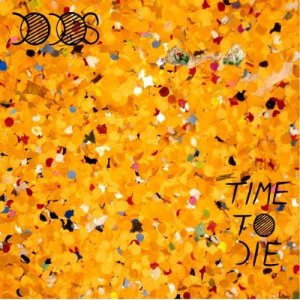
61tHFulJaZL._SS500_A little bit of polish can oftentimes be a good thing, but it can also rob a band of the raw energy that allows it to stand out, sacrificing what made previous efforts so intriguing; such is the case with Time to Die.  That’s not to say that Time to Die is a bad album, but after last year’s critically acclaimed release Visiter, it can only be considered a disappointment.  With Visiter, The Dodos brought a unique sound to the table full of percussion based, complex acoustic guitar tracks probably best exemplified in album standout “Fools” (the folks at Miller took notice and featured the song in a Miller Chill commercial).  The refreshing African inspired drum beats created an urgency to the music that really put a whole new spin on this whole indie-folk genre popping up all over the place.  Unfortunately for Time to Die, the percussion seems to be an afterthought, never really being featured, and the songs suffer for it.  The former duo has added a third member since Visiter, bringing in a full time vibraphone player who adds to the sound creating more lush tunes, but for the most part the songs on Time to Die just seem to lose their edge.

There is something to be said for maturation, which I do think Time to Die certainly can attest to.  The first three songs, including lead single “Fables” indeed show how the group has grown as songwriters, but overproduction and a loss of enthusiasm just seems to plague the disc.  The group brought on Phil Ek (The Shins, Fleet Foxes, Built to Spill) to produce Time to Die, but it just doesn’t seem to be the right fit for the San Francisco trio.  The group had already perfected their sound to create a uniqueness that really could have been exploited, but Ek seems to have missed out on that and fired a rare miss.  When it comes down to it, Time to Die is the results of a lo-fi band evolving into the next stage of their careers, which ultimately might be a fine thing.  But after releasing one brilliant album in Visiter, I guess I was just hoping a little more gradual shift, if a shift at all.

[“Fables” – Time to Die]


Lightning Dust – Infinite Light

August 22, 2009

JAG139It’s safe to say that mere seconds into Infinite Light, the second album from Lightning Dust, you can pretty much decide what side of the fence you sit on with the Vancouver duo.  Amber Webber’s warbling yet affecting vocals make their appearance shortly after a few soft strums of an acoustic guitar on opening track “Antonia Jane” and the stage is set for the rest of the folky, yet synth laden tracks that follow.  Lightning Dust is the side project of Black Mountain’s Amber Webber and Joshua Wells, but whereas Black Mountain is often described as having a harder more psych-rock sound, Lightning Dust is the avenue by which Webber and Wells can create more stripped down, melodic and softer tunes.

After “Antonia Jane” fades out, a machine driven drum beat leads into first single “I Knew”, a two-and-a-half minute jaunt which takes the album from the straight-forward approach of “Antonia Jane” to the eeriness of Webber’s vocals complimented by the synth based instrumentation that characterizes most of the album.  Webber’s vocals are still the distinguishing feature throughout, but the music steps it up a notch from their self-titled debut album back in 2007 to create melodies that can better serve Webber’s unique style.  Maybe this is best seen on album centerpiece “Never Seen” which features a glorious breakdown in the latter half of the track which for me is easily the highlight of the entire disc.  At 10 songs and just shy of 35 minutes, Infinite Light flies by.  But, with so much substance in the tracks included, it doesn’t feel like you’ve been cheated at all, unless you’re one of the few who decide against Lightning Dust after those first few seconds, in which case, maybe you should give it another try.

[“I Knew” – Infinite Light]

[“Never Seen” – Infinite Light]


Phoenix – Wolfgang Amadeus Phoenix

June 22, 2009

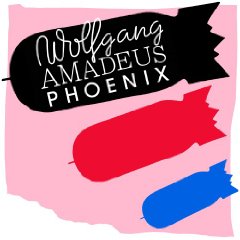
51nmnl5bKLL._SL500_AA240_“Do you remember when 21 years was old?” sings Thomas Mars on “Countdown”, one of the many great tracks from the fourth (and best) album from French pop-rockers Phoenix. It’s in this simple lyric that he maybe provides the best example of the sense of nostalgia that seems to carry Wolfgang Amadeus Phoenix from just a fun danceable indie rock album, to a career defining work of art. You have to love a French band who writes and records all their music in English (thanks guys!), but what’s more impressive is that this is band who has not only mastered an American genre such as the NYC garage-band revival made popular by The Strokes, but also taken it to a level that similar American bands (like…The Strokes) have stalled to get to. Joining “Countdown” as album standouts is the best 1-2 punch of the year in “Lisztomania” and “1901” which open the album with two of the best tracks released in 2009 and are a great introduction to the rest of the tightly-constructed tunes that make up the disc. And while Wolfgang Amadeus Phoenix may not be as in-your-face nostalgic as say, M83’s Saturday’s=Youth or The Pains of Being Pure at Heart’s self titled release from earlier this year, it’s still hard to listen to the album and not get some sense of sentimentality for times gone by. It’s in the ambient electronics heard throughout, it’s in the lyrics, but nostalgic or not, Phoenix have created a great album that should appeal to all fans from those of indie-dance to NYC garage-rock, and really just anyone who wants to listen to catchy pop-rock by a band who has subtly put itself in rarefied air.

[“Lisztomania” – Wolfgang Amadeus Phoenix]

[“1901” – Wolfgang Amadeus Phoenix]


The Phenomenal Handclap Band – S/T

June 18, 2009

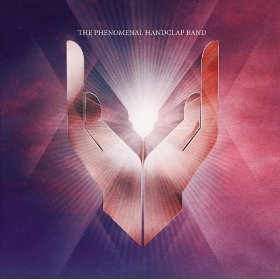
5109c6er5DL._SL500_AA280_It’s safe to say that I’m not the only one who loves all things “phenomenal”. I also have a strong place in my heart for handclaps in music, as well as (some) bands. So it stands to reason that I would love a band called The Phenomenal Handclap Band. And while, I’m not ready to make that kind of lasting commitment, I am pretty smitten over this NYC supergroup set to release their eponymous debut album next week.  I got a hold of the advance release digital version and it’s certainly living up to the expectations garnered by the band ever since the group made their first appearance last summer and became one of the talks of this past year’s SXSW. The Phenomenal Handclap Band is a fusion of soooo many genres but what stands out the most is easily the discofunk throwback sounds of the music. It’s a psychedelic listening experience and I can’t imagine how fun their live show would be. I’m not even going to try to go into further details with reviewing the disc as this genre(s) is nothing I’m familiar with at all. Their breakout track “15 to 20” is already making its rounds as a summer classic (although there are better tracks), one of the many reasons it’s hard not to classify the album as the quintessential summer jam record.

[“You’ll Disappear” – The Phenomenal Handclap Band]

[“15 to 20” – The Phenomenal Handclap Band]


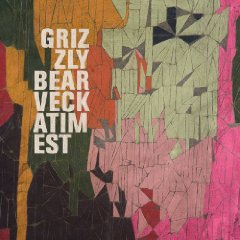
Grizzly Bear – Veckatimest

June 16, 2009

61k7WWOc75L._SL500_AA240_

As far as I’m concerned, 2006’s Yellow House was a decent album, with a few songs, most notably “Knife” and “On a Neck, on a Spit”, that blew the listener away and at least put Grizzly Bear on the map. But, for me, it was a bit overrated as the album was devoid of many memorable moments and was, well, boring. A beautiful album yes, and it was certainly evident that there was something there that hinted at Grizzly Bear’s talent and potential, but as a whole, I put the album on the back burner and never really felt a need to come back to it. Enter In Ear Park, the 2008 release from Grizzly Bear’s sister band Department of Eagles. Led by Daniel Rossen and featuring 2 other Grizzly Bear members, I surprisingly felt a much greater connection with this release and considered it one of the best albums of the year, just barely missing out on my top 10. There were elements on this release that I felt could benefit Grizzly Bear, but who knew if that would ever happen, so in essence, I became a fan of Department of Eagles more so than of Grizzly Bear.

I didn’t pay any attention to Grizzly Bear news, including their Friend EP release in 2007, but knew they had a new full-length album in the works for 2009 and was sure I would at least give it a listen. My first sense of excitement surrounding the new release was hearing “Deep Blue Sea” on the Dark Was the Night compilation (also featured on the Friend EP as a Dan Rossen home recording) and noticing hints of what I hoped Grizzly Bear could become and despite the fact that “Deep Blue Sea” would not be featured on the new album, the hype for Veckatimest continued to grow. The album leaked in early 2009 to horrible quality, but continued to generate buzz. So here we are, three years after Yellow House and with a fantastic side project release in between, Veckatimest finally has its day, and alas, the foundation laid by Yellow House has been built upon to create an epic release, easily Grizzly Bear’s masterpiece, that is sure to go down as one of the year’s best and the album that takes Grizzly Bear to a new level.

Click to read the rest of the review >>